How Long for Baby Weight to Come Off
The All-time Ways to Lose Weight After Pregnancy
For some women, that joyful time when a warm and snuggly newborn has finally arrived can be mixed with emotions near the changes in their own bodies, and many of these women take questions about how they volition lose the weight they put on over the past nine-plus months.
Studies prove that many women announced to agree on to at to the lowest degree a couple of pounds postpartum, and a quarter of women retain 11 or more pounds (5 or more than kilograms) a twelvemonth after giving birth. Later having a baby, a woman retains, on average, 2.five to 5 lbs. (ane to ii kg), said Kathleen Rasmussen, a professor of maternal and child nutrition at Cornell University. That may not seem similar much, only if a adult female goes on to have more children or gains more weight for other reasons, the pounds can add up, she said.
Holding on to pregnancy weight tin can pb to serious wellness consequences down the route, putting moms at run a risk for chronic conditions like eye illness and diabetes. And losing the pregnancy weight is of import non just for new moms, but for babies, too. Going into a time to come pregnancy at a college weight tin can put both the mom and the developing infant at risk for medical complications, such as gestational diabetes and hypertension.
To determine the best practices for women who want to shed the baby weight, Live Science dove securely into the data, reviewing the best studies on postpartum weight loss and talking to key experts in the field. Ultimately, nosotros plant that losing weight afterwards pregnancy boils down to iii main points, starting before you even give birth:
- Weight gain during pregnancy (jump to section)
- Nutrition and physical activity (jump to section)
- Breast-feeding (leap to section)
For women worried virtually extra pregnancy pounds, the experts we spoke with agreed that it's certainly possible to render to your pre-pregnancy weight, and indeed, that should ultimately exist your goal.
"Nearly women naturally lose much of the weight they gained in pregnancy without much try," said Dr. Emily Oken, a professor of population medicine at Harvard Medical School in Boston. And although it's possible for women to lose all of their pregnancy weight without making major changes in their lives, the natural shift in women'south lifestyles that happens later on they give nascence certainly introduces new challenges.
"It's not so much that [women] need to brand major changes, but that they need to figure out how to fit in the good for you eating and activities they used to do," Oken told Alive Scientific discipline.
Weight gain during pregnancy
There'south no getting around weight gain during pregnancy, of class. Simply it'southward important to empathize how much weight yous should proceeds, why your body is putting on pounds and how it plays a office in what happens after the baby arrives.
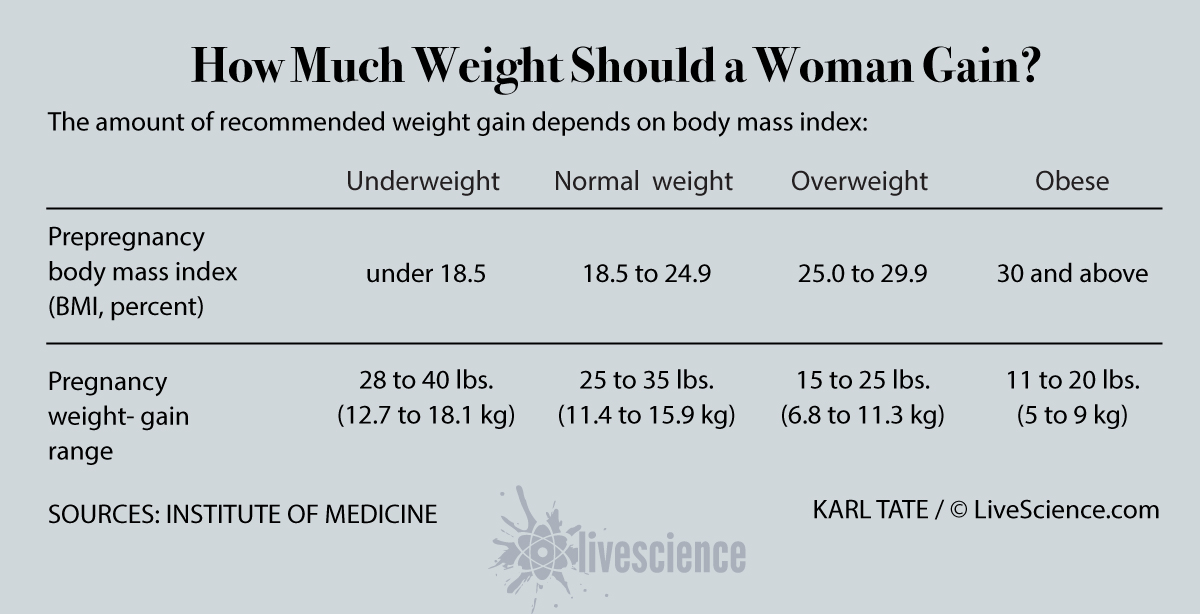
So, how much weight should a woman gain during pregnancy? It all depends on her body mass index (BMI) earlier she gets pregnant. [Calculate Your BMI]
Co-ordinate to the Institute of Medicine (IOM), women who are considered underweight should aim to gain 28 to 40 lbs. (12.vii to eighteen.i kg); women with a normal BMI should aim to proceeds 25 to 35 lbs. (eleven.3 to 15.9 kg); women in the overweight category should aim to proceeds 15 to 25 lbs. (6.8 to xi.3 kg); and women in the obese category should aim to gain 11 to 20 lbs. (5.0 to 9.1 kg). (For women who are significant with twins, the recommended weight proceeds amounts are higher.)
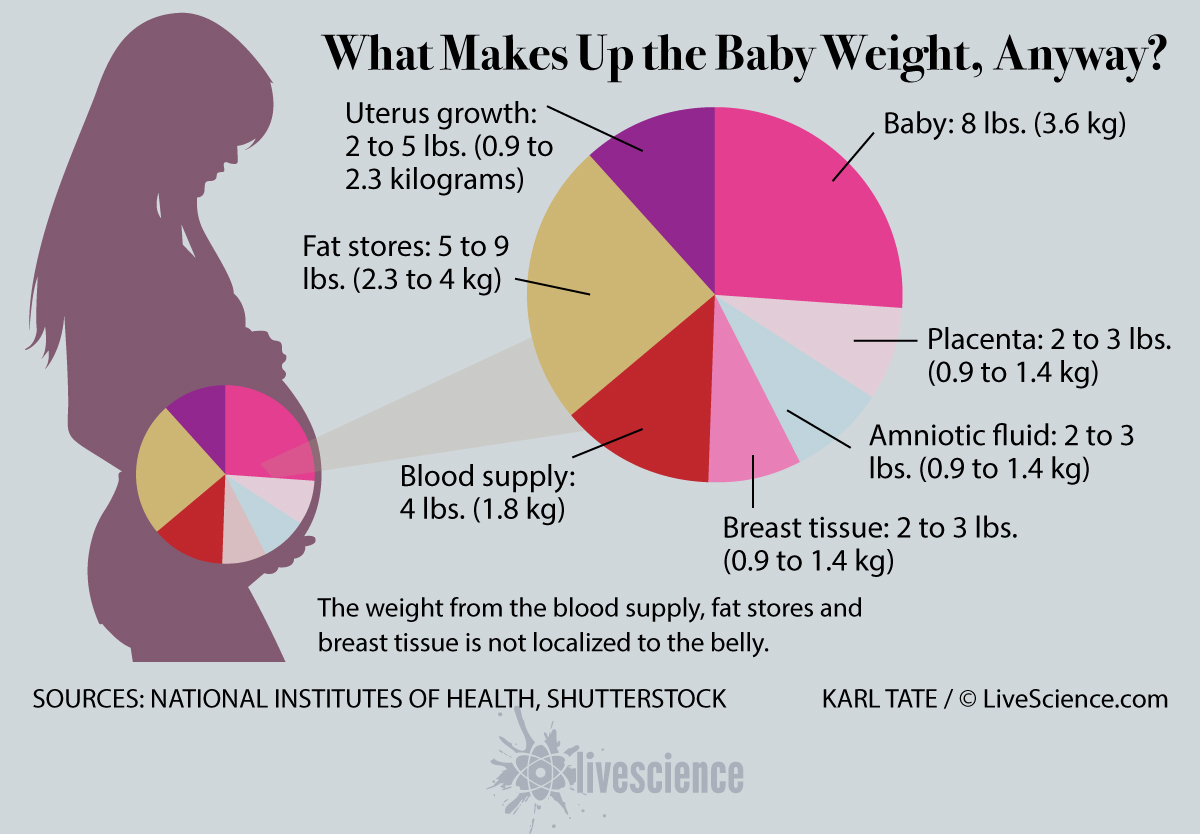
And although a weight gain of 25 to 35 lbs. for someone with a normal BMI may sound like a lot — certainly, a newborn infant doesn't weigh that much — those extra pounds practise serve a purpose. As illustrated in the infographic below, pregnancy pounds also come from the placenta, the growing uterus and growing breasts, and increased blood and fluid volume in the woman'due south trunk. And yep, added fat also weighs in.
In addition, some studies suggest that gaining too much weight during pregnancy increases the likelihood of a cesarean-section delivery, according to the review. (While C-sections are generally considered safe, they do deport additional risks compared with vaginal births. For case, a C-section is a major surgical process, and having a C-section for a first birth can ofttimes lead to echo C-sections in future deliveries.)
According to the IOM, one of the major reasons women should limit their weight gain during pregnancy is to reduce risks to the baby's health. Gaining too much weight during pregnancy increases the likelihood that the babe will have a high birth weight, which can put the baby at hazard for obesity and metabolic syndrome during childhood, according to a 2015 review published in the journal Expert Review of Endocrinology & Metabolism. (Metabolic syndrome is a combination of medical bug that include loftier blood pressure, a large waist circumference and low levels of "practiced" cholesterol.)
Finally, gaining too much weight during pregnancy likewise may be associated with preeclampsia, the authors wrote. Preeclampsia is a serious complexity that can develop during pregnancy when a woman has both high blood pressure and excess levels of protein in her urine. It can put both the female parent and the babe at risk.
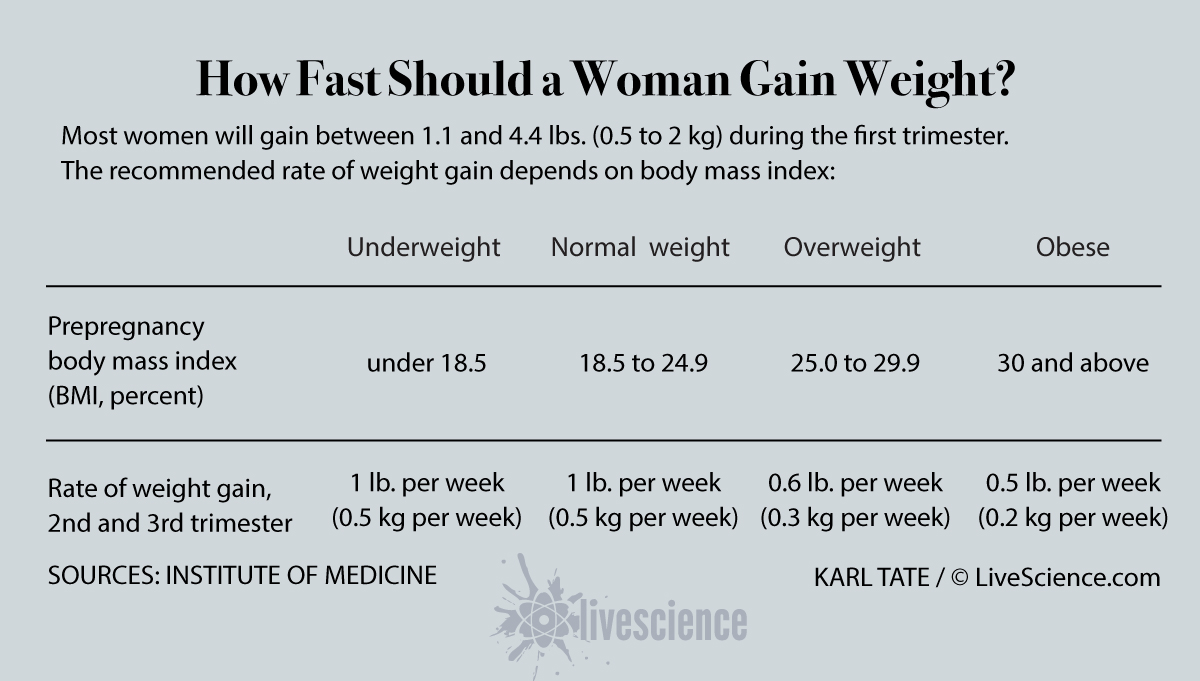
Simply the amount of weight a adult female gains should not exist spread equally over the 3 trimesters of pregnancy. The IOM advises women to proceeds between ane.one and 4.four lbs. (0.5 to two kg) during the commencement trimester. And then, during both the 2d and third trimesters, women are advised to gain 0.5 to 1 lb. (0.23 to 0.45 kg) per week, depending on their pre-pregnancy BMI. The IOM advises that, during these trimesters, underweight and normal-weight women gain one lb. per week, that overweight women proceeds 0.six lbs. (0.27 kg) per calendar week and that obese women gain 0.5 lbs. per calendar week. [Having a Baby | Stages of Pregnancy]
But a key point for expecting women to keep in listen is that the amount of weight gained during pregnancy is associated with the corporeality of weight lost afterward — quite strongly, in fact.
"Weight gain during pregnancy is the unmarried biggest predictor of postpartum weight retention," said Dr. Jacinda Nicklas, an assistant professor of internal medicine at the University of Colorado School of Medicine and the atomic number 82 writer of the 2015 review.
Oken agreed. "Gestational weight proceeds is the biggest contributor to postpartum weight memory," she told Live Scientific discipline. "Women who gain inside the recommended amount of weight during pregnancy take less weight to lose and are more than probable to get back to their pre-pregnancy baseline."
Simply despite the risks associated with gaining also much weight during pregnancy, betwixt forty and threescore percentage of women gain more than the guidelines recommend.
To keep weight proceeds within a healthy range, a woman should certainly non exist "eating for two," experts say. A woman needs "close to zero extra calories in the first trimester," Rasmussen said. "The body makes a lot of immediate changes in response to pregnancy [in the first trimester], but these changes don't crave a lot of calories," Rasmussen told Live Scientific discipline. Even then, a lot of the "overgain" that women feel happens in that first trimester, she said.
Indeed, studies show that despite recommendations that women proceeds the to the lowest degree corporeality of weight during the outset trimester, in reality, this is oft the trimester when the largest amount of excessive weight gain (pounds gained above the recommended levels) occurs.
"Women don't demand to gain more than a few pounds during the entire showtime trimester," Oken said. And doing so can accept negative consequences. "It is becoming increasingly clear that excess weight gain, fifty-fifty very early in pregnancy, can predict later weight memory and [worse] middle health not only for the mom, but also for her baby," she said.
In a 2015 study published in The American Journal of Obstetrics & Gynecology, Oken found that weight gain in the get-go trimester was more than strongly associated with weight memory at vii years postpartum than weight gain during the 2d or 3rd trimesters. Besides much weight proceeds in the beginning trimester was also linked to higher blood pressure later on pregnancy than was weight gain in the second or third trimesters.
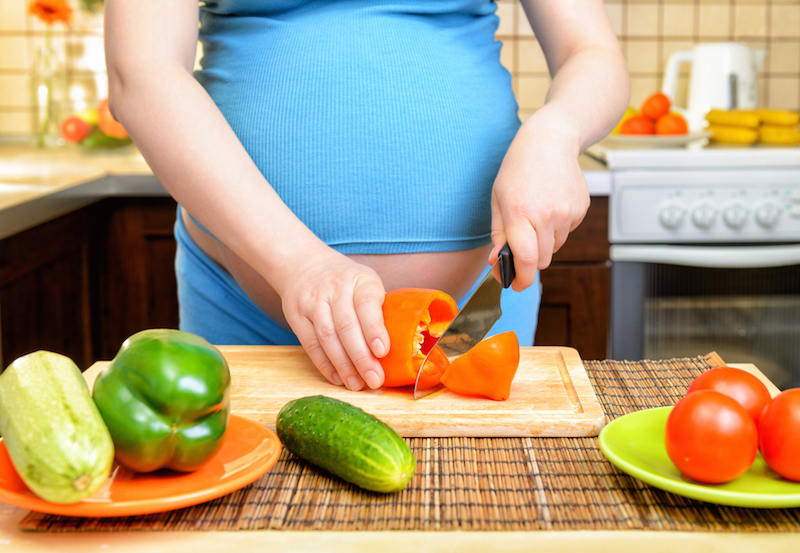
The backlog weight gained above the recommended amount during the first trimester is primarily fatty, as opposed to weight from the fetus, the placenta or actress fluid in the adult female's trunk (because these weigh very little at this signal in the pregnancy), co-ordinate to the researchers. Unlike fluid and nonfat tissue, this fatty proceeds is likely more hard to lose after pregnancy, co-ordinate to the researchers. [Torso Changes During Pregnancy]
"It can be a challenge to non gain too chop-chop" in the commencement trimester, Oken said. For example, women who experience the fatigue that is very common in the first trimester may overeat; other women may experience nausea that's helped by snacking, she said.
And "in some cases, women might remember that, 'Well, now that I'm meaning, weight gain is expected, and so I don't demand to retrieve and then much about what I'm eating,'" Oken said. It's these women whom doctors especially want to educate about healthy weight gain during pregnancy, she added. However, "many women don't run into their OBs [obstetricians] until the finish of the get-go trimester, then we need to get the word out" in other ways, Oken said.
In lodge to keep weight gain within the guidelines, Oken recommends that women focus on eating food-dense foods, including fruit, dairy products and nuts, and especially avoid "empty" calories or extra desserts. Also, pregnant women should try to avoid drinking their calories in sugar-sweetened beverages, and instead make sure to drink plenty of h2o, as the symptoms of thirst (such as fatigue and irritability) can sometimes be mistaken for hunger, she said. [How to Gain Weight During Pregnancy, the Salubrious Way]
But women shouldn't crush themselves upward if they deviate from a day of healthy eating.
Pregnancy can exist stressful, and focusing and then much on being perfect causes needless worrying during pregnancy, said Katherine Tallmadge, a registered dietitian and an op-ed correspondent to Live Science. It's OK to indulge occasionally, but information technology'due south yet important to be smart about such indulgences in order to avoid overgaining, Tallmadge told Live Science. So, when moms-to-be treat themselves, they should try for smaller amounts or stay on the healthier side of the "treat," she said. For instance, if you're craving pizza, become for vegetable, she said. [How to Cope with Stress During Pregnancy]
Women who take gained too much shouldn't get discouraged, because everyone gains weight at unlike rates, Nicklas said. Women who do gain too much early on in pregnancy should endeavour to boring their rate of weight gain as their pregnancy progresses, she said. Women who have a BMI greater than 35 before getting pregnant may not have to proceeds any weight during pregnancy, she said.
However, doctors don't recommend that women intentionally try to lose weight during pregnancy, Nicklas added.
Y'all had a baby! Now what?
After giving birth, the final thing that's likely on a new mom's heed is going on a diet. And according to Cheryl Lovelady, a professor of diet at the University of N Carolina at Greensboro, that's simply fine.
"I tell moms, 'The first month, don't worry most your weight,'" Lovelady said.
Of course, a woman will immediately lose some of the pregnancy weight simply by giving birth — namely, the weight of the baby, the placenta and the amniotic fluid.
And over the next few weeks, a woman can also expect to lose the weight of the actress fluid in her body that congenital upwards during pregnancy. After the fluid is gone, what remains is the extra fatty that the woman added during pregnancy.
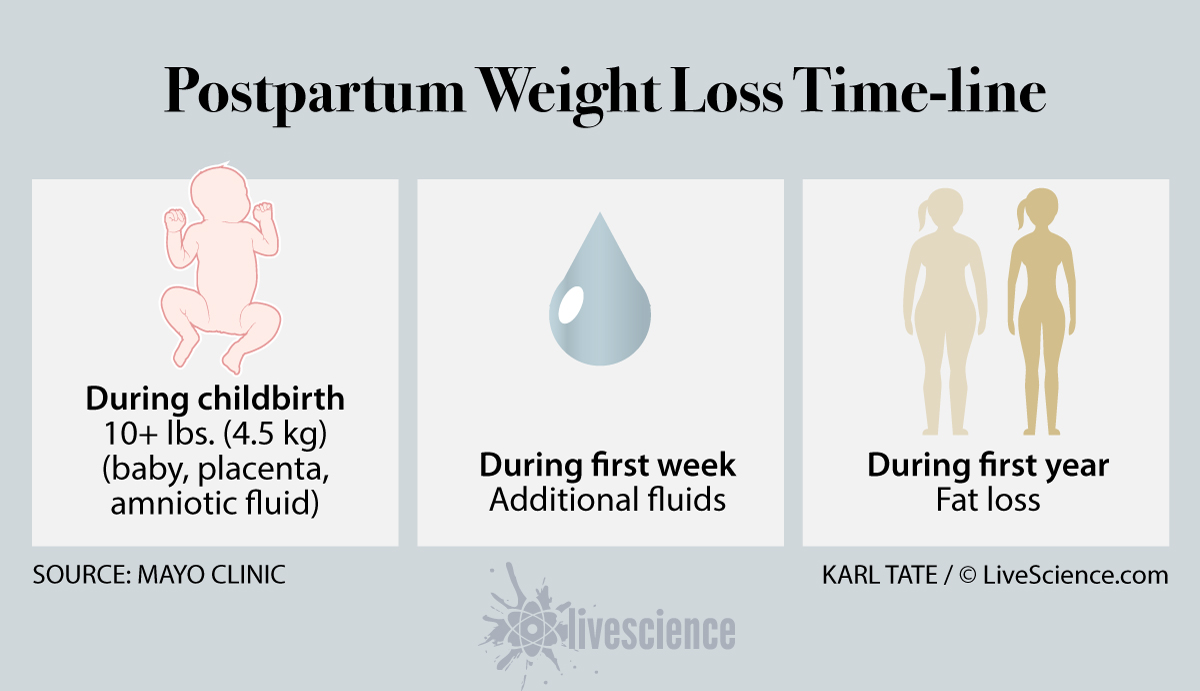
Women should exist able to lose their extra weight by half dozen months after they requite birth, Lovelady said.
"We recommend a weight loss of approximately ane pound per week," Lovelady told Live Science. Yet, in reality, women volition likely lose more weight at the beginning, and the weight loss will slow every bit they get closer to their goals, she said. Past the end, information technology may be only i pound per month, but that weight loss will exist a pound of fatty, every bit opposed to fluid, she added. [2016 All-time Bathroom Scales]
Non all of the experts agreed that all of the weight had to come off within six months. However, 12 months seems to exist the upper limit for how long it should accept for women to lose all of their pregnancy weight. That means women who started out at a normal BMI earlier pregnancy should aim to render to a normal BMI, and women who were overweight or obese earlier pregnancy should aim to return to their pre-pregnancy weight, and and then go on losing weight, if possible, Nicklas said.
Nicklas added that the current research suggests that women who don't lose their weight inside this time period are at greater risk of retaining the weight for the long term.
"I recommend that women talk to their md if they are having problem losing weight" at this point, she said. "Many women may demand the structure of an prove-based diet or weight-loss program to lose their pregnancy weight."
It's as well important for a woman to lose the weight before getting pregnant again, experts say.
"Ideally, a adult female would exist at a salubrious weight by the time she enters her 2d pregnancy," said Paige van der Pligt, a researcher at the Centre for Physical Activity and Nutrition Research at Deakin University in Australia. But because "the menstruation of fourth dimension between two pregnancies will be variable — and with approximately fifty percent of pregnancies being unplanned — timing for weight loss can be challenging," she said.
"But the enquiry shows the states that information technology is possible," she added.
Diet and physical activeness postpartum
With the exception of breast-feeding (discussed beneath), losing the infant weight is actually no different from losing weight at any other point in life, according to the experts who spoke with Live Scientific discipline. [The All-time Way to Lose Weight Safely]
"Testify shows the states that both nutrition and physical action play an of import role in the weight-loss procedure for anyone attempting to lose weight," van der Pligt said. "For women following childbirth, this actually isn't any different."
Indeed, in her 2013 review of studies on the topic, published in the journal Obesity Reviews, van der Pligt concluded that "overall, programs which target combined nutrition and physical activity strategies have been more effective than those which focus on just one of these." She noted that "programs which included individualized back up are too important."
In the review, van der Pligt and her colleagues reviewed data from xi studies that were focused on postpartum weight-loss interventions. They found that vii of the studies involved interventions that were constructive in helping women lower their weight retention after pregnancy, and that, of these, half dozen included both dietary and physical activity components, according to the review. The authors concluded, all the same, that "the optimal setting, delivery, intervention length and recruitment approach" for the most constructive interventions remain unclear.
A 2013 meta-analysis published in the periodical Cochrane Database of Systematic Reviews reached similar conclusions. Looking at data from xiv studies, the authors found that "nutrition combined with exercise or diet lonely compared with usual care seemed to help with weight loss later on giving nascence" only that farther research is needed.
Van der Pligt stressed that "nutrition and exercise" don't mean women need to get on an farthermost diet or start preparation for a marathon. Several studies advise that making small changes can exist helpful for losing pregnancy pounds.
For example, in the Active Mothers Postpartum trial, which enrolled 450 overweight and obese postpartum women, cutting out junk food and being less sedentary were associated with postpartum weight loss. (Lovelady, who was an author on that report, noted that these results were specific to overweight and obese women. Women who start out at a normal weight and gain within the guidelines usually don't take an result with postpartum weight retention, she said.)
Overall, a woman should be able to follow any healthy diet after pregnancy to lose weight, Lovelady said. Diets such every bit Weight Watchers, a Mediterranean diet or a vegetarian diet tin all be good options, she said. [Mediterranean Diet: Foods, Benefits & Risks]
In addition, another, smaller study from Sweden — which included 68 overweight or obese women, all of whom were breast-feeding — found that dietary changes had the greatest touch on postpartum weight loss. Beginning at ten to 14 weeks postpartum, the women were randomly divided into iv groups for a 12-week intervention. One group was counseled about their nutrition, another on diet and exercise, and another on exercise alone. The 4th group received no advice and served as a control grouping, for comparison. The women in the diet-just group not simply lost the virtually weight but were likewise the only group that continued to lose weight 9 months later, according to the report.
Rasmussen, who was an author on the study, noted that the dietary changes the women made were not major. The intervention focused on cutting out junk nutrient, eating more vegetables and eventually reducing the overall number of calories the women were consuming, she told Live Science.
(One limitation of the study, however, was that the exercise component was not a huge change from the amount of physical activeness the women were getting prior to starting the written report, Rasmussen said. Then, while they did adhere to the exercise requirements, it didn't represent a substantial increase in their energy expenditure, she said.)
"I tin can tell you, diet does work," Rasmussen said. She said, for weight loss, she recommends a diet that highlights food-dense calories and avoids empty calories. [Diet and Weight Loss: The Best Ways to Eat]
And although diet appears to be the driving factor in losing the infant weight and exercise doesn't have a huge upshot on weight loss, the experts agreed that it's yet important for new moms to become back to moving as before long as possible.
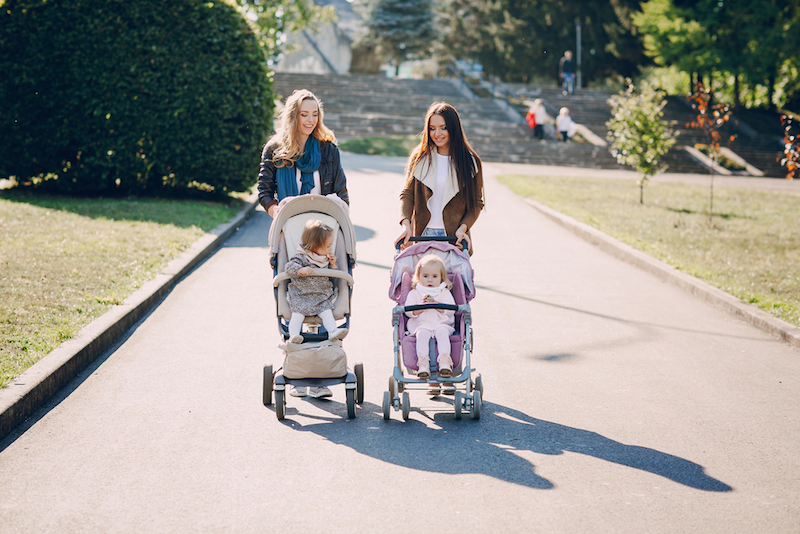
Yes, gone are the days when women were bars to bed residuum subsequently giving nativity — certainly, a woman should take care of herself and recover from giving nascence, but information technology'southward important to get moving, Rasmussen said.
"Most women tin can start walking soon after giving birth, regardless of whether they give birth vaginally or accept a C-section," Nicklas said. But women interested in doing more vigorous activity, such equally lifting weights, should ask their OB when they can start, she added.
All of the experts we spoke with agreed: Walking is a slap-up way for new moms to become practice. [2016 Best Pedometers]
Walking during the postpartum menstruum has been shown to accept first-class wellness benefits, van der Pligt said. Plus, it'due south convenient and cheap, and tin be an important social action for new moms, she added. [How to Start Exercising Again Afterwards Pregnancy]
In one of Lovelady'southward studies, for instance, the women started their walking program at iv weeks postpartum and gradually built upwardly to walking for 45 minutes a 24-hour interval, five days a week, Lovelady said. The women in the study had been largely sedentary for the previous three months, however, she added. For well-nigh women, moderate practise during pregnancy is considered condom and healthy.
It'due south besides important to reduce inactivity. In a 2007 study published in the American Journal of Preventive Medicine, researchers looked at the effects of television viewing, walking and trans-fatty consumption on postpartum weight retentivity. They constitute that women who watched less than 2 hours of television a day, walked for at least 30 minutes a 24-hour interval and limited their consumption of trans fatty had a decreased likelihood of retaining at least 11 lbs. (five kg) a twelvemonth after giving birth.
Although researchers know that physical activity lone does not appear to cause weight loss, in combination with a healthy diet, regular exercise helps to maintain the weight loss that occurred, said Oken, who was the pb author of the study.
Breast-feeding
Although all of the experts interviewed agreed that diet and practice strategies for postpartum weight loss don't really differ from the strategies i would employ for weight loss at whatever other time of life, afterwards giving birth, women may have one unique advantage: breast-feeding. [Breast-feeding Basics: Tips for Nursing Mothers]
For example, in Rasmussen's 2008 study, published in The American Journal of Clinical Nutrition, the researchers concluded that "breast-feeding could also brand a meaningful contribution, eliminating [postpartum weight memory by 6 months] in many women."
(Nicklas noted that, while total breasts may feel heavier, in reality, they wouldn't contribute much to a chest-feeding woman's weight.)
Certainly, there are several factors that play a role in whether chest-feeding has an upshot on weight loss, including how intensively and how long a adult female breast-feeds, Rasmussen said. But generally speaking, the more than a woman breast-feeds, the greater an issue it volition have on her weight loss, she said.
Simply put, chest-feeding burns calories — the trunk requires extra energy to make milk. (However, this might non be the entire explanation, Rasmussen said. Researchers haven't yet tested whether other factors likewise contribute to weight loss associated with breast-feeding, she said.)

Indeed, the calorie requirements for chest-feeding women are higher than those for women who are not breast-feeding. Women who exclusively breast-feed burn down most 500 extra calories a solar day, compared with women who are non breast-feeding, Lovelady said. But mostly, breast-feeding women are instructed to increase their caloric intake by simply about 330 calories daily, she said. The resulting deficit contributes to weight loss.
In other words, the calorie recommendations for lactating women don't completely embrace the amount needed to produce milk, Rasmussen said. Researchers assume that part of that caloric cost will exist met by burning trunk fatty, she said. So, for women who are reasonably active and gained a reasonable amount of weight during pregnancy, chest-feeding is really quite important, Rasmussen said. "But you can undo information technology all by overeating," she added.
Still, according to Rasmussen, betwixt diet, exercise and chest-feeding, breast-feeding comes out on peak equally the virtually important factor in whether a woman volition lose all of her pregnancy weight.
"You have to realize there are two players here: There's the mother, and the baby," Rasmussen said. "So the optimal [arroyo] for the mother and the infant together is, first for the mother to breast-feed. The "infant gets the best diet nosotros take to offer, and the female parent, if she doesn't overeat, will lose weight," she added. "If [a adult female] wants to lose more weight than that, she can diet, she can exercise or she tin can do both," Rasmussen said.
Nonetheless, researchers haven't reached a consensus on the effects of breast-feeding on weight loss.
"This has been looked at in many studies, and there'southward nonetheless not a articulate answer" on the role that chest-feeding plays in postpartum weight loss, Nicklas said. If all of the studies are considered, however, there are probably slightly more showing that breast-feeding does help, she added.
Simply to reassure women who are non able to breast-feed, or choose not to, Nicklas noted that breast-feeding is not essential for weight loss.
Van der Pligt agreed. Although many women do lose weight while breast-feeding, many studies have shown trivial or no influence of breast-feeding on a female parent'south weight modify, she said.
"And then we tin can't assume that just because a woman is breast-feeding, she will lose weight," van der Pligt said. Information technology's more than about promoting salubrious, attainable lifestyle behaviors that will have health benefits for women and assist her in achieving a healthy weight following childbirth, she said.
This article is office of a Live Science Special Written report on the Science of Weight Loss. It will be updated whenever pregnant new enquiry warrants. Note that whatever significant alter in diet should exist undertaken simply after consultation with a physician.
Follow Sara Thou. Miller on Twitter @SaraGMiller . Follow Alive Scientific discipline @livescience , Facebook & Google+ . Originally published on Live Science .
Sara is a staff writer for Alive Scientific discipline, covering health. She grew up exterior of Philadelphia and studied biology at Hamilton College in upstate New York. When she'south not writing, she tin can be found at the library, checking out a large stack of books.
Source: https://www.livescience.com/53768-how-to-lose-weight-after-pregnancy.html
0 Response to "How Long for Baby Weight to Come Off"
Postar um comentário